
Resolution condemning caste-based discrimination introduced in US congress
The resolution, H.Res.158, was introduced into the U.S. House of Representatives, “Condemning Dalit untouchability, the practice of birth-descent discrimination against Dalit people, which is widely practiced in India, Nepal, the Asian diaspora, and other South Asian nations, and calling on these countries to recognise the human rights of […]US urged to actively support IDSN’s application for UN consultative status
OPEN LETTER Mr. John F. Kerry Secretary of State of the United States of America U.S. Department of State 2201 C Street NW Washington DC 20520 23 March 2015 Dear Mr. Secretary, We, the undersigned group of civil society organizations, are writing to urge the United States, as a member of the ECOSOC Committee on NGOs, […]
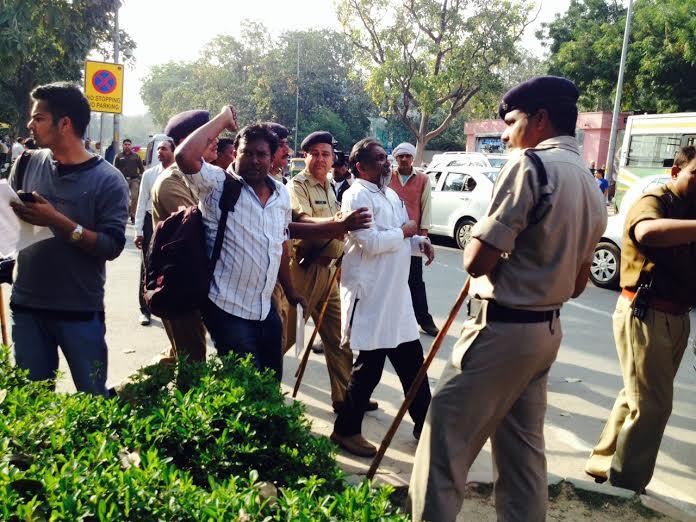
Leading Dalit activists arrested for protesting massive cuts in budgets meant for Dalits
Massive cuts to provisions for education of Dalits and Adivasis were central to the protest and public meeting, organised by the Campaign of Adivasis and Dalits for Rights on Education (CADRE 2201). “The budgeted expenditure by the Modi government for the most marginalised sections – Dalits and Adivasis – of our country has seen a colossal decline this year. We […]Human Rights Watch and Amnesty International’s 2015 reports raise serious concern over caste discrimination
Failure of state authorities to protect the rights of Dalits In the India chapter of the Amnesty International 2014-15 report it is noted that “corruption, caste-based discrimination and caste violence remained pervasive,” and that, “state authorities often failed to prevent and at […]
India’s blocking of IDSN’s UN consultative status continues
The blocking of IDSN reflects a frightening trend in India for obstructing the work of civil society organisations and human rights defenders, particularly when it comes to Dalit and minority rights. Dalit rights activists across India have been feeling the pressure from both official and unofficial levels, especially when it comes to speaking about caste discrimination to an international audience. […]

World Bank President and UN Secretary-General: Ending India’s caste-based exclusion is key to shared prosperity
Speaking at the Indian Council of World Affairs UN Secretary-General Ban Ki-Moon stressed the need for inclusive growth for shared prosperity saying that, “millions of Dalits, Tribals and others still face discrimination, especially the women and girls.” On a visit to Gujarat the World Bank President Jim Yong Kim, similarly cautioned that while India was an accelerating economy, “Indian society has an enduring exclusion that is based, among other things, on caste identities. This bias can impede shared prosperity, serving as a basis for discrimination in many spheres, including in employment and other markets, as well as in public services.”
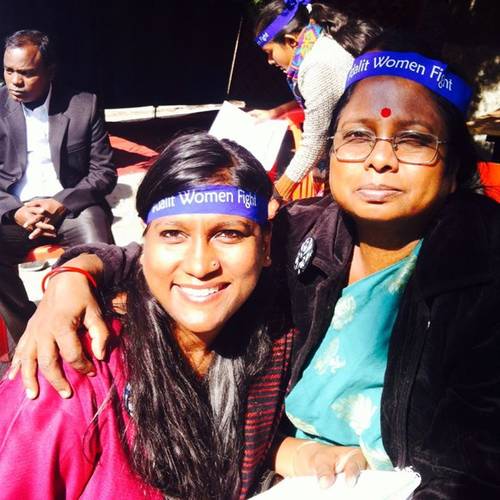
Dalit women fight for their rights with marches and mass events in Nepal and India
Dalit women from Nepal, India and Bangladesh joined hands to assert their rights at a rally in Kathmandu, at the fringes of the people’s SAARC meeting. Hundreds of Dalit women from across Nepal gathered at the FEDO National Dalit Women conference, to put Dalit women’s rights on the agenda and In India several long marches and mass gatherings of Dalit women took place throughout November and December.

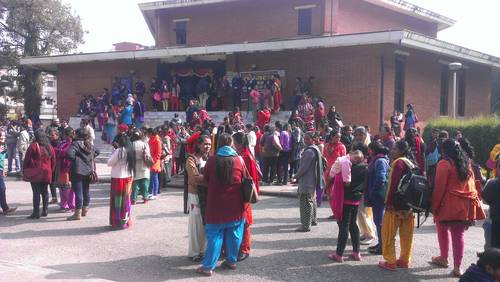
Hundreds of Dalit women gather at conference in Nepal
Hundreds of Dalit women from across Nepal gathered in Kathmandu for the “Dalit Women’s National Conference for Democracy, Justice, Sustainable Peace and Inclusive Constitution” from 2-4 December 2014. The conference was organized by the Feminist Dalit Organization (FEDO) and international speakers included UN Women and IDSN.
Caste discrimination debated in the UK House of Lords
The UK Government’s action on tackling caste discrimination in India was the topic of a debate on the 26th November in the UK House of Lords. Many Lords spoke out passionately against caste-based discrimination and asked that the UK Government in its relations with India take-up fighting caste-based discrimination.

South Asian Parliamentarians meet to discuss strategies for ending caste discrimination
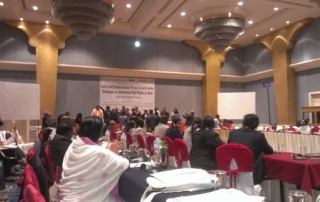
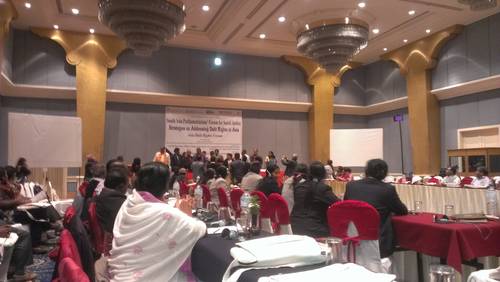
Thirty-one parliamentarians from India, Nepal, Pakistan and Bangladesh gathered for a meeting of the Asian Parliamentarians’ Forum on Dalit Concerns in Kathmandu, at the fringes of the 2014 SAARC meeting. The former Prime Minister of Nepal, Baburam Bhatttarai, delivered a remarkable keynote speech, calling for an international framework and a regional thematic approach to eliminate caste discrimination, and cooperation between South Asian parliamentarians for a common agenda.