 Gallery
India’s Dalits celebrate Dr. Ambedkar
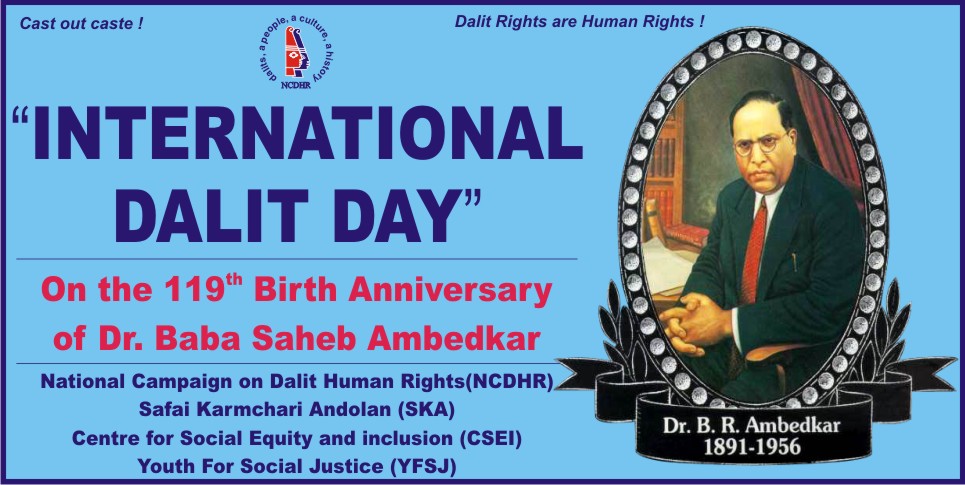
On 14 April, Dalit communities across India will celebrate the 119th birth anniversary of the spiritual father of the Dalit movement and architect of the Indian constitution, Dr. B.R. Ambedkar.

On 14 April, Dalit communities across India will celebrate the 119th birth anniversary of the spiritual father of the Dalit movement and architect of the Indian constitution, Dr. B.R. Ambedkar.
Three major organisations in Nepal have welcomed a judgment in a case involving a caste-related assault. The perpetrator was sentenced to a year’s imprisonment.
The Dutch Government is addressing caste discrimination in its bilateral dialogues with India and through EU channels. Foreign Minister M.J.M. Verhagen recently answered questions on the issue in Parliament.
Discrimination against the Buraku community is still an issue in Japan, and the government should take effective steps against it, says UN Anti-Racism Committee.
As IDSN celebrates its tenth anniversary on 10 March, the struggle for Dalit rights is gaining increasing international momentum, including an endorsement by Archbishop Desmond Tutu. Much, however, remains to be done if one of the world’s most serious human rights issues, which affects 260 million people, is to be eliminated.
In a historic move, the House of Lords has paved the way for legislation that will make caste-based discrimination illegal in the UK. Such a ban would also serve as an example to other countries.
An eight-year old Dalit girl in Nepal may have been the victim of a sacrificial murder because of her caste status. The Asian Human Rights Commission (AHRC) is concerned that the local authorities may not do enough to investigate the crime.
A new report provides Nepal’s Constituent Assembly (CA) with a clear roadmap for ensuring the rights of all Nepalese people, including the country’s sizeable Dalit population.
Human Rights Watch (HRW) has given due credit to the Government of Nepal for its endorsement of the draft UN principles and guidelines to eliminate caste discrimination. India, on the other hand, is criticised.
A ground-breaking study on caste discrimination in the Indian state of Gujarat shows that the practice of ‘untouchability’ is still prevalent. The report also makes clear that the Indian legal system is failing to address the issue.

 Gallery
 Gallery
 Gallery
 Gallery