
The UN Special Rapporteur on minority issues, Professor Nicolas Levrat, has urged Nepal to take stronger action to ensure that Dalits and minority communities can fully enjoy their rights. Following his country visit to Nepal in December 2025, the Special Rapporteur highlighted the urgent need to close the gap between Nepal’s progressive legal framework and the daily reality faced by communities affected by discrimination, exclusion and violence. His final report, published on 9 March 2026, places caste discrimination firmly at the centre of the human rights challenges facing the country.
While Nepal’s Constitution recognises Dalit rights and caste-based discrimination is criminalised, the report finds that Dalits remain among the most marginalised communities in Nepal. It documents persistent barriers in access to education, housing, healthcare, employment and justice, as well as continued exclusion from public institutions and decision-making processes.
During the visit, the Special Rapporteur met with more than 200 civil society actors, including Dalit women, Dalit survivors of caste-based discrimination and violence, Dalits with disabilities and young people from Dalit and minority backgrounds. Several IDSN members took part in meetings with the Special Rapporteur in Nepal. A number of these members had also contributed to the joint UN Universal Periodic Review report on Nepal, helping to bring evidence and recommendations on caste-based discrimination to the attention of the UN human rights system.
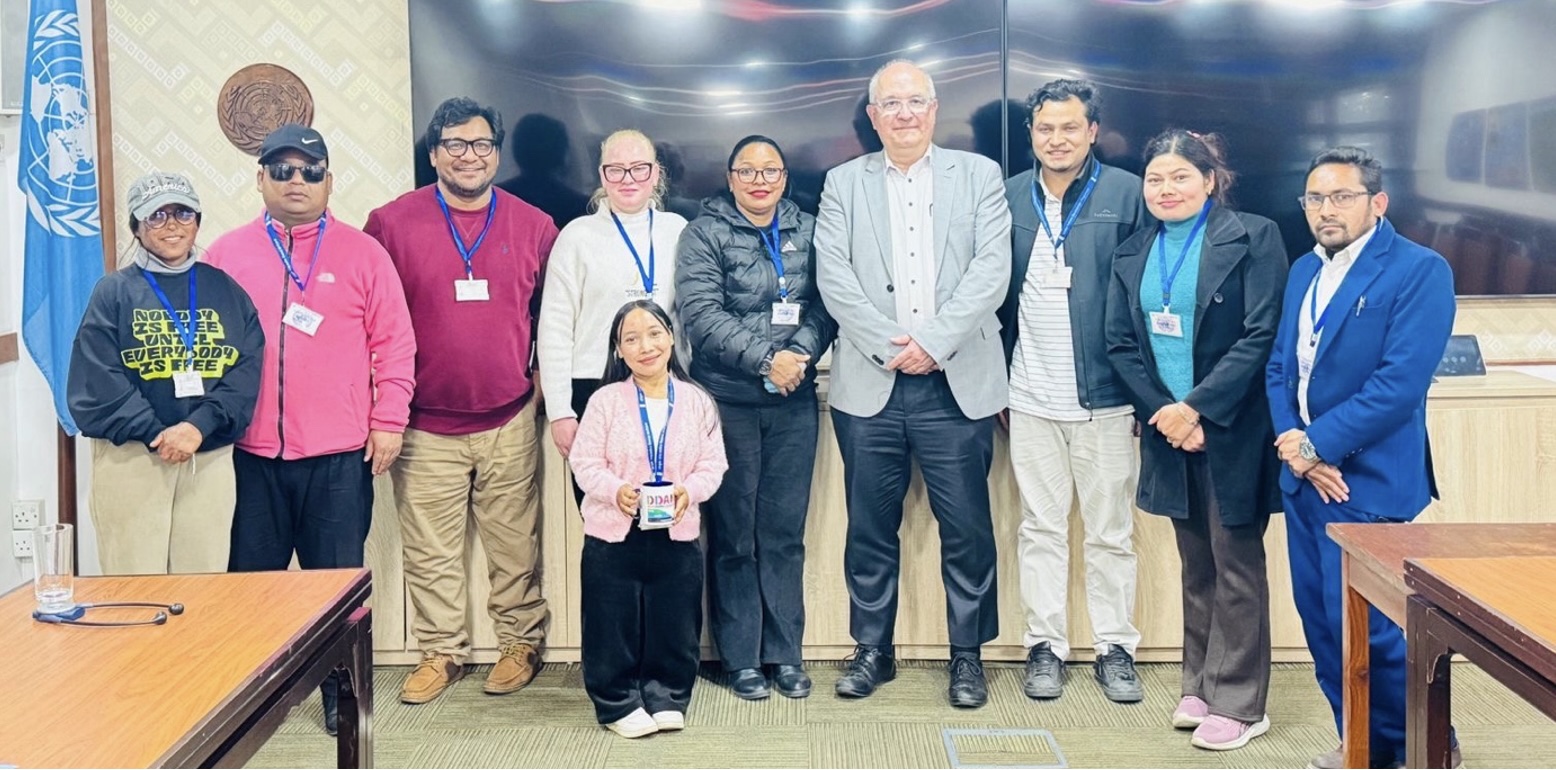
Photo by Krishna Ghataraj: Dalit with Disabilities Association Nepal (DDAN) meeting with the Special Rapporteur.
A key concern raised in the report is the continued impunity for caste-based violence. The Special Rapporteur points to major gaps in the implementation of the Caste-based Discrimination and Untouchability (Offence and Punishment) Act, including failures by police to register complaints promptly, weak investigations and pressure on victims to settle cases informally. He also highlights the high rate of acquittals in cases involving violence against Dalits.
The report further underlines how caste discrimination is reinforced through structural inequality. Dalit children continue to face serious obstacles in education, while Dalits remain severely underrepresented in the civil service, judiciary and other State institutions. The Special Rapporteur therefore calls for stronger anti-discrimination measures, better access to justice and meaningful inclusion of Dalits and minorities in public life. Importantly, the report also recognises the vital role of civil society organisations in supporting Dalits and minorities to claim their rights, access justice and remain in education.
For IDSN, the visit and the publication of the final report are an important reminder to the world that caste discrimination in Nepal remains a serious human rights issue requiring sustained national and international attention.