
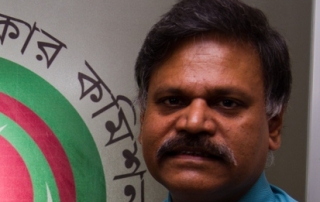

NHRC chairman calls for law to protect Dalits
Dalits in Bangladesh face severe national and social injustice, says Dr Mizanur Rahman, chairman of the country's National Human Rights Commission.
Dalit Christian worker brutally killed in Sindh, Pakistan
The Pakistan Dalit Network demands the arrest of the killers of the Mirpurkhas Christian worker, who was brutally killed. This serious case demonstrates the physical abuse and social discrimination, which Pakistan’s Christian and Hindus scheduled castes population is subject to because of their religious beliefs and "low caste" status.
UPRs of India and the UK: Observations on outcomes and follow up
As a follow up to the Universal Periodic Reviews of India and the UK on 24 May, IDSN calls for the effective implementation of all caste-related recommendations and for constructive engagement with civil society in the implementation process.

UN increasingly concerned about caste
Press Release (May 31, 2012). Following yesterday’s release of the reports on the UN human rights reviews of India and the UK, it is evident that UN member states are increasingly concerned about caste discrimination, affecting an estimated 260 million people worldwide.
UN makes strong recommendations for India to address rampant caste discrimination
The final report on last week’s UN human rights review of India has just been adopted, and included ten recommendations and seven questions and observations on caste discrimination, made by a total of 14 UN member states. It is now imperative that the Indian government accept all the recommendations made on caste.
Caste included in the adopted report on the UK UPR review
The report on the UN human rights review of the UK was adopted today. A significant recommendation on caste discrimination has been included in the final report. This will provide the basis for monitoring and reporting on the UK’s efforts to amend its legislation to include caste and promote a national strategy to eliminate caste discrimination in the next four years.
Consultation on enforcing and amending the SC/ST Prevention of Atrocities Act in India, chalks out future strategies
The consultation, organised by the National Coalition for Strengthening the Scheduled Castes and Scheduled Tribes Prevention of Atrocities Act (NCSPA), recapped and analyzed the interventions made by the Coalition, arrived at a consensus on elements of proposed amendments to the act and chalked out effective future strategies required for national, state and local level.

UPR-Reviews of the UK and India: Time to act on caste discrimination
When India and the UK come up for review by the UN Universal Periodic Review (UPR) on 24 May, IDSN urges all UN member states to seize this important opportunity to address concerns about caste discrimination based on recommendations by civil society and UN human rights bodies.
India: UN Members Should Act to End Caste Discrimination says Human Rights Watch and IDSN
Press Release (HRW & IDSN): (Geneva, May 14, 2012) – United Nations member states should make ending caste-based discrimination a priority when they review India’s human rights record at the UN Human Rights Council in late May, 2012, Human Rights Watch and the International Dalit Solidarity Network (IDSN) said today. The Universal Periodic Review (UPR) of India at the Human Rights Council is scheduled for May 24.
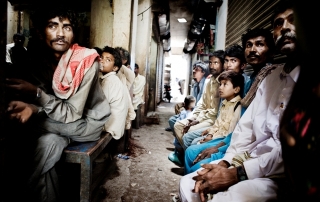

UPR Pakistan: Joint call for adoption of law prohibiting caste discrimination
Pakistan will be reviewed for the second time by the UPR Working Group at the 14th UPR session on 30 October 2012. On this occassion, Pakistan Dalit Solidarity Network (PDSN) and IDSN have prepared and submitted a stakeholders' report to the OHCHR on 23 April 2012 concerning discrimination against Dalits in Pakistan.