
A delegation of Dalit human rights defenders visited Brussels in July for a series of meetings with European Union institutions, Members of the European Parliament and civil society organisations to discuss how the EU can strengthen its engagement on caste-based discrimination in South Asia.
The visit began with a meeting with Finland’s delegate to the Council of the European Union’s Working Party on Asia, where the delegation discussed EU Member State approaches towards South Asia and opportunities to ensure greater attention to caste-based discrimination within regional policy.
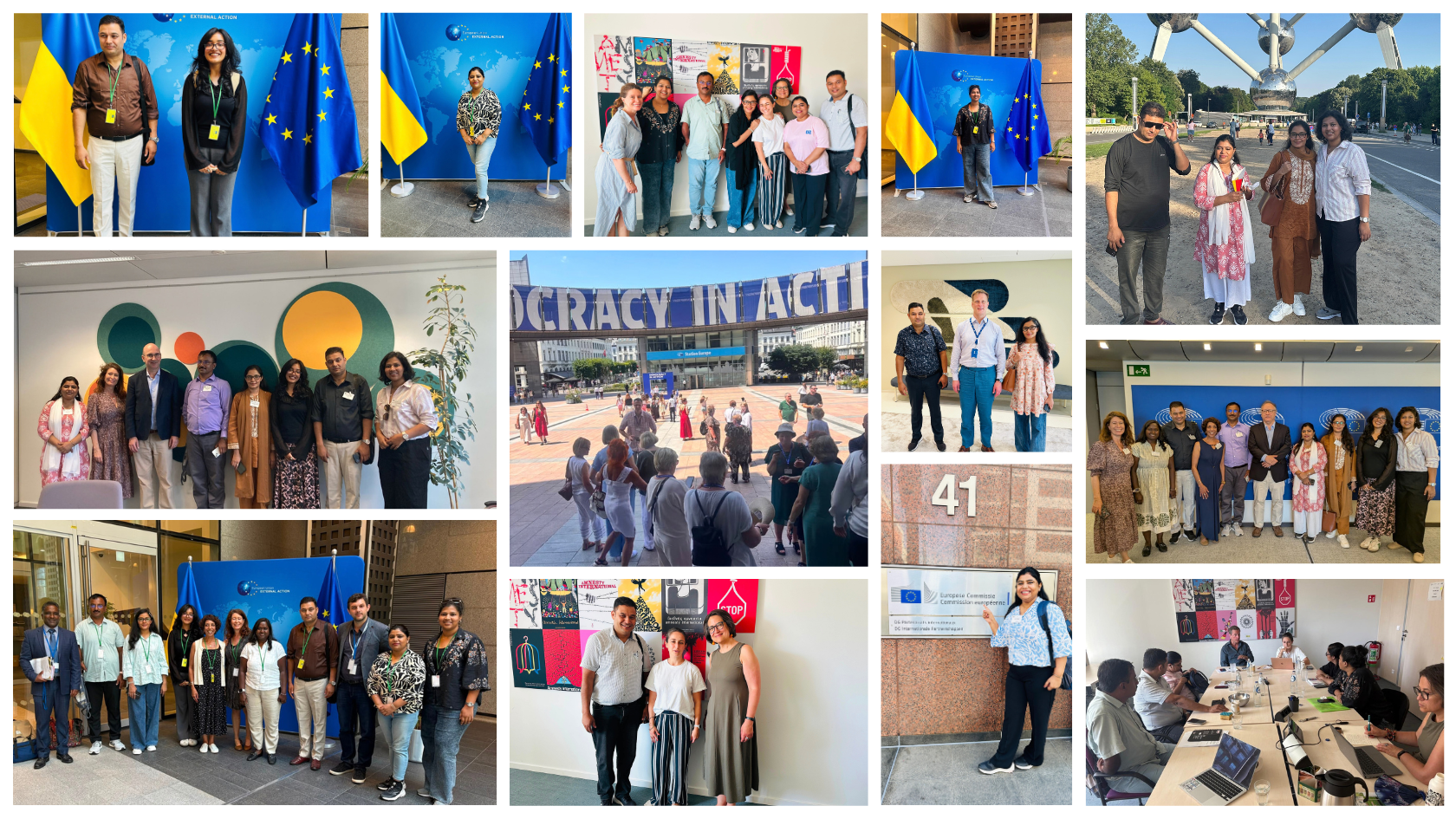
The delegation then met officials from the European Commission’s Directorate-General for International Partnerships (DG INTPA) to discuss how EU development cooperation can contribute to addressing caste-based discrimination, including through work on gender equality, human rights, and democratic governance.
Meetings with the European External Action Service (EEAS) focused on the importance of integrating Dalit rights into the EU’s diplomatic engagement with caste-affected countries in South Asia. Delegates highlighted opportunities to raise caste discrimination through human rights dialogues and broader political, trade, and cooperation relations, including frameworks through which access to EU markets is linked to the implementation of international human rights and labour standards. The delegation also met with the office of the EU Special Representative for Human Rights.
At the European Parliament, delegates held discussions with staff from the Secretariats of the Delegations for relations with India and with the countries of South Asia, as well as the Secretariat of the Subcommittee on Human Rights.
They also met Members of the European Parliament Ana Catarina Mendes, Vice-Chair of the Progressive Alliance of Socialists and Democrats Group, and Francisco Assis, the group’s coordinator for human rights, together with their political advisers. The discussions provided an opportunity to brief the MEPs on current challenges facing Dalit communities and to explore ways in which the European Parliament can maintain attention to caste-based discrimination within its human rights work.
The delegation furthermore met the office of the European Parliament Foreign Affairs Committee’s standing rapporteur on India, and discussed plans for engagement with India, including dialogue with civil society and reporting on human rights developments. The day concluded with a meeting with the office of the EU Special Envoy for the promotion of freedom of religion or belief outside the EU.
On the final day, the delegation met representatives from key Brussels-based civil society organisations. Delegates shared developments from their respective countries and discussed how caste-based discrimination can be more systematically integrated into NGO advocacy in Brussels and into organisations’ work in South Asia.
Across the visit, EU officials, parliamentarians and civil society representatives engaged with the delegation on the situation facing Dalit communities, possible areas for EU support, and ways to strengthen attention to caste-based discrimination across EU human rights, development, diplomatic and external relations policies.