
From 24–28 November, IDSN facilitated a delegation of Dalit human rights defenders from Nepal to come to Geneva for advocacy meetings ahead of the Universal Periodic Review (UPR) pre-session of Nepal, as well as participation in the pre-session meeting. The visit enabled key Dalit human rights defenders to brief recommending States on ongoing caste and intersectional discrimination and the urgent need for stronger protections before Nepal’s UPR in January 2026.
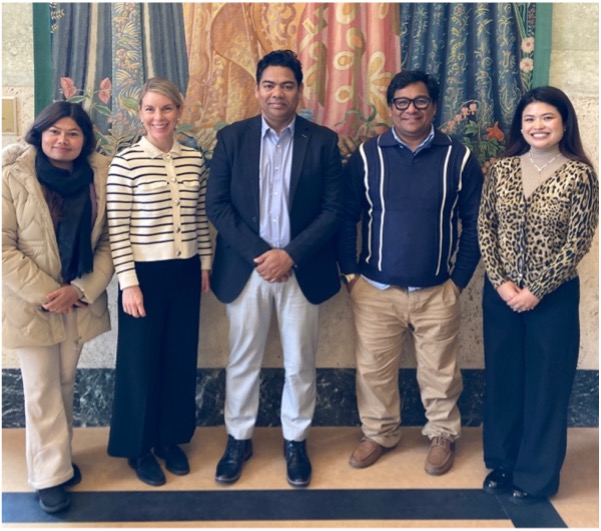
Permanent Mission of Finland
The delegation included Rup Sunar (Dignity Initiative), Sarita Barmashaka (Feminist Dalit Organization FEDO), Krishna Gahatraj and Pampha Purkoti (Dalits with Disabilities Association Network – DDAN). Organised by IDSN, the delegates met with State representatives from Switzerland, Chile, Norway, Finland, Ireland, the UK and the EU Delegation.
Rup Sunar (Dignity Initiative) presented the joint shadow report submitted by 36 Dalit-led organisations, stressing the need for Nepal to fully implement constitutional guarantees for Dalits including Article 40 and to adopt stronger legislation to ensure the rights and protections promised to Dalits.
Sarita Barmashaka (FEDO) discussed the importance of keeping a focus on Dalit women and girls, outlining how Dalit women suffer from multiple and intersectional forms of discrimination, situated at the bottom of caste, gender and socio-economic hierarchies. She underlined that Nepal should prioritize and invest in the integrated approaches of economic, social and political empowerment. Ms Barmashaka recommended that States making recommendations should discuss accelerating sustainable actions ensuring dignity, meaningful participation and equitable opportunities, enabling Dalit women and girls to fully contribute to sustainable development.
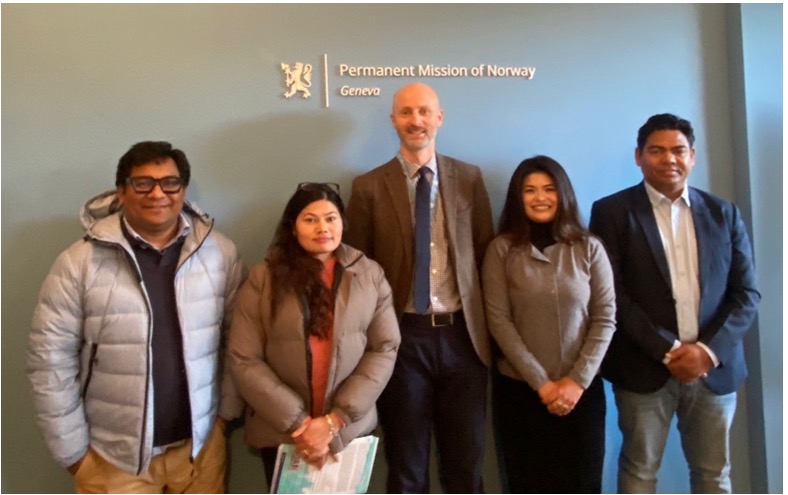
Permanent Mission of Norway
Krishna Gahatraj and Pampha Purkoti (DDAN) outlined the priorities of their relatively new organisation, established in 2023. The reason for founding this network was due to the exclusion of Dalits with disabilities from the mainstream disability movement, and the exclusion of Dalit women from the mainstream gender movement. They asked recommending States to request Nepal to ensure the intersectional identities of Dalits with disabilities are addressed in all State mechanisms and ensure the meaningful participation of Dalits with disabilities.
The delegation also raised human rights concerns linked to the recent “Gen Z protests,” transitional justice gaps, rights violations affecting LGBTQIA+ Dalits and the severe vulnerabilities of Dalit girls to trafficking. Across all meetings, States expressed commitment to examining the shadow report and considering these recommendations in their positions for the upcoming UPR.
Need to address caste and intersectional discrimination raised at Nepal’s UPR Pre-Session
At the UPR Info pre-session on 28 November, representatives from numerous States joined Nepal’s National Human Rights Commission (NHRC), civil society groups and human rights organisations to identify priority concerns.
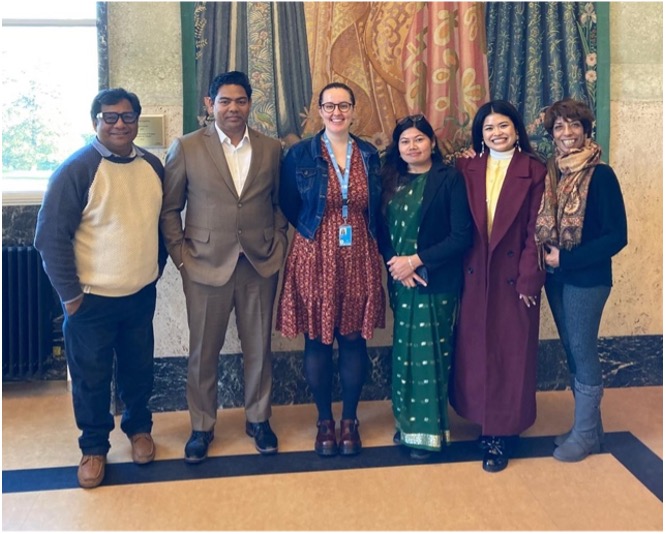
Permanent Mission of Ireland
While the session addressed a broad range of issues, caste-related issues took centre stage during interventions by the Dalit Welfare Association, which underscored the lack of progress on caste-related UPR recommendations from previous cycles. The speaker stressed the urgency of ending caste discrimination, ensuring Dalit representation and enacting legislation to operationalise constitutional rights while calling for greater public awareness and political commitment to Dalit dignity and empowerment.
Norway’s delegation requested further elaboration on caste-related intersectionality, prompting a discussion on untouchability, caste hierarchies and barriers preventing Dalit journalists from accessing leadership roles.
The pre-session reinforced the consensus that caste, gender, disability and other intersecting identities must remain central to State recommendations for Nepal.
The Fourth Cycle UPR of Nepal will take place in January 2026. More information is available via UPR Info.