
<?xml version="1.0" encoding="utf-8"?>
<rss version="2.0" xmlns:content="http://purl.org/rss/1.0/modules/content/">
	<channel>
		
		<title>International Dalit Solidarity Network: Latest News</title>
		<link>http://idsn.org/</link>
		<description>Latest news from idsn.org</description>
		<language>en</language>
		<image>
			<title>International Dalit Solidarity Network: Latest News</title>
			<url>http://idsn.org/EXT:tt_news/ext_icon.gif</url>
			<link>http://idsn.org/</link>
			<width></width>
			<height></height>
			<description>Latest news from idsn.org</description>
		</image>
		<generator>TYPO3 - get.content.right</generator>
		<docs>http://blogs.law.harvard.edu/tech/rss</docs>


		<lastBuildDate>Wed, 15 May 2013 15:51:00 +0200</lastBuildDate>
		
		
		<item>
			<title>UN expert: Education system fails Dalits</title>
			<link>http://idsn.org/news-resources/idsn-news/read/article/un-expert-education-system-fails-dalits/128/</link>
			<description> In his most recent report, the UN Special Rapporteur on contemporary forms of racism notes that discrimination against Dalits in the educational system is widespread in caste-affected countries. It leads to high dropout rates and even suicides.</description>
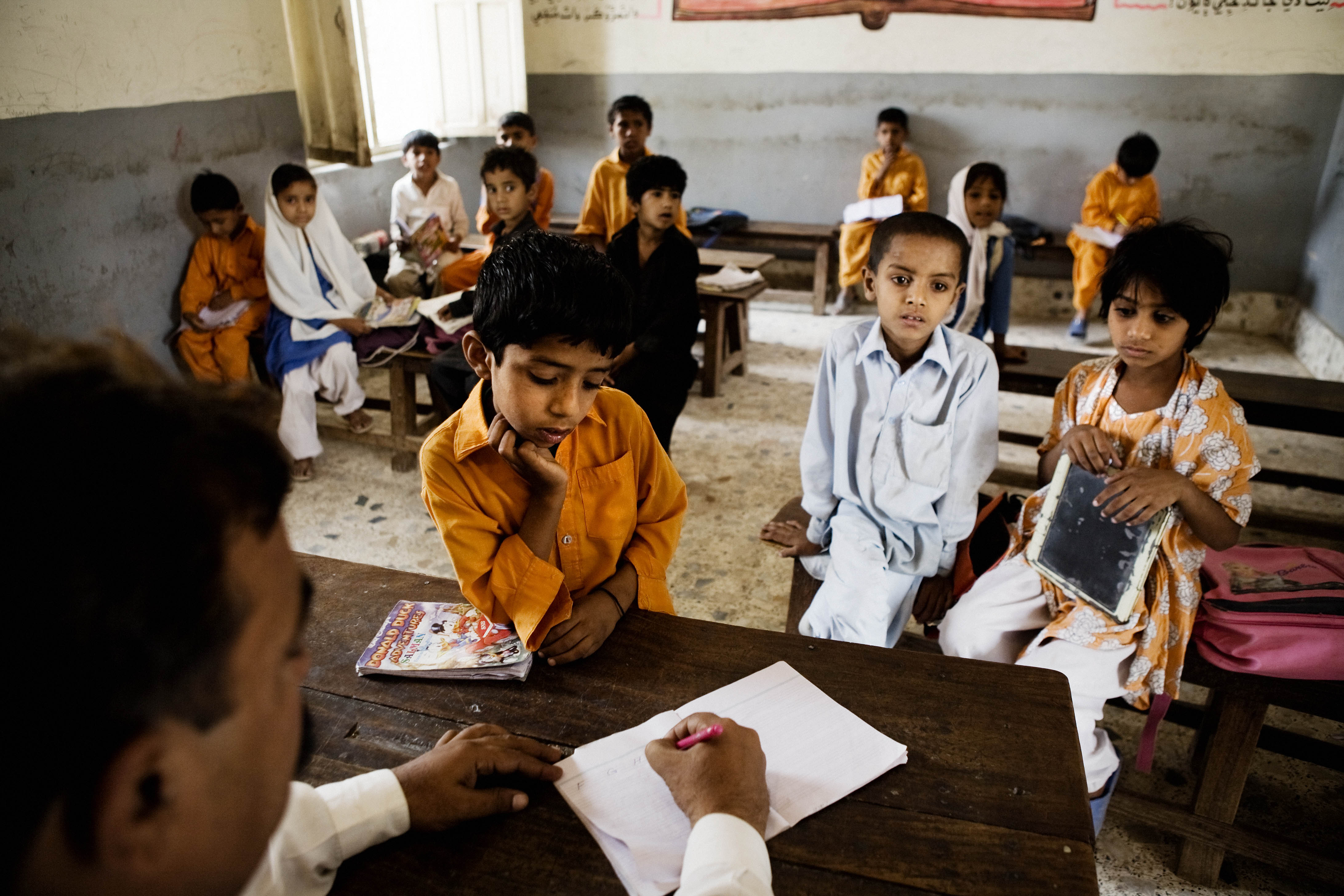
			<content:encoded><![CDATA[<p class="bodytext"><p class="summary">In his most recent report, the UN Special Rapporteur on contemporary forms of racism notes that discrimination against Dalits in the educational system is widespread in caste-affected countries. It leads to high dropout rates and even suicides.</p>All children, especially Dalits and other vulnerable groups, should have access to good-quality education. Discrimination of these groups is “a challenge to the construction of a tolerant society which rests upon an inclusive education system”.</p>
<p class="bodytext">This is the message conveyed by Mutuma Ruteere, the UN Special Rapporteur on contemporary forms of racism, in his report to the upcoming session of the UN Human Rights Council. The report focuses on education as a central factor in preventing and combating racism and related forms of intolerance and includes numerous references to caste discrimination. It notes that discrimination against Dalits in the educational system is widespread in caste-affected countries.</p>
<p class="bodytext">“Alienation, social exclusion and physical abuse are present throughout all levels of education, from primary to university education. Illiteracy and dropout rates among Dalits are very high due to a number of social and physical factors. Legislation on the issue is limited, and...</p>]]></content:encoded>
			
			 
			<pubDate>Wed, 15 May 2013 15:51:00 +0200</pubDate>
			
		</item>
		
		<item>
			<title>Culture of impunity harms Dalit women</title>
			<link>http://idsn.org/news-resources/idsn-news/read/article/culture-of-impunity-harms-dalit-women/128/</link>
			<description> On the last day of her visit to India, the UN Special Rapporteur on violence against women, Ms Rashida Manjoo, said that Dalit women experience some of the worst forms of discrimination and oppression.</description>
			<content:encoded><![CDATA[<p class="bodytext"><p class="summary">On the last day of her visit to India, the UN Special Rapporteur on violence against women, Ms Rashida Manjoo, said that Dalit women experience some of the worst forms of discrimination and oppression.</p>India lost an opportunity when introducing new rape legislation recently. The legislative measures adopted in the wake of last December's brutal gang rape incident in Delhi fail to address inequality and discrimination issues that are closely interlinked with violence against women.</p>
<p class="bodytext">This is one of the messages contained in a statement from the UN Special Rapporteur on violence against women, Rashida Manjoo, who concluded an official mission to India yesterday. She stressed that a legislative and policy approach is insufficient without addressing discrimination and violence and the pervasive culture of impunity in India.</p>
<p class="bodytext">Many of her observations are of particular relevance to Dalit women and women from other oppressed and marginalised communities. The Special Rapporteur mentioned caste-based discrimination and violence as some of the numerous manifestations of violence against women and girls in India. Such manifestations are rooted in discrimination and inequality, and are strongly...</p>]]></content:encoded>
			
			 
			<pubDate>Thu, 02 May 2013 14:56:00 +0200</pubDate>
			
		</item>
		
		<item>
			<title>Haryana: Dalit villagers are living in fear</title>
			<link>http://idsn.org/news-resources/idsn-news/read/article/haryana-dalit-villagers-live-in-fear/128/</link>
			<description> Following the attack on 200 Dalit families by a dominant caste mob that was angered by an inter-caste marriage, many Dalits have fled Pabnava village in Haryana. Those who remain feel extremely insecure.</description>
			<content:encoded><![CDATA[<p class="bodytext"><p class="summary">Following the attack on 200 Dalit families by a dominant caste mob that was angered by an inter-caste marriage, many Dalits have fled Pabnava village in Haryana. Those who remain feel extremely insecure.</p>The authorities in the Indian state of Haryana have failed to protect the human rights of Dalits and must be held accountable for their callous attitude. This is the conclusion of a fact finding team that recently visited the village of Pabnava in Haryana where 200 Dalit families came under attack on 13 April.</p>
<p class="bodytext">The violent attack by approximately 400 members of the dominant ‘Rod’ community was triggered by the inter-caste marriage between a Dalit man and a woman from the dominant caste. Having failed to force the couple to divorce, the mob went on a rampage in the village’s Dalit quarter and ransacked the homes of 200 families. Six Dalit villagers were injured in the attack.</p>
<p class="bodytext">Following the incident, a fact finding team comprising of lawyers and human rights defenders – including members of the National Campaign on Dalit Human Rights (NCDHR) – visited Pabnava in Kaithal district and reported that many Dalit villagers have fled their ruined homes. The few remaining Dalits are living in...</p>]]></content:encoded>
			
			 
			<pubDate>Tue, 30 Apr 2013 14:29:00 +0200</pubDate>
			
		</item>
		
		<item>
			<title>UPR Bangladesh: Dalits need protection</title>
			<link>http://idsn.org/news-resources/idsn-news/read/article/upr-bangladesh-dalits-need-protection/128/</link>
			<description> When Bangladesh was reviewed by the UN’s Universal Periodic Review (UPR) mechanism on 29 April, concerns were expressed about the human rights situation of the country’s minorities, including Dalits.</description>
			<content:encoded><![CDATA[<p class="bodytext"><p class="summary">When Bangladesh was reviewed by the UN’s Universal Periodic Review (UPR) mechanism on 29 April, concerns were expressed about the human rights situation of the country’s minorities, including Dalits.</p>Vulnerable and marginalised groups in Bangladesh, including Dalits, need more protection from the country’s government, a number of states declared during the UPR session of Bangladesh in Geneva. Two states, Slovenia and the Holy See, made specific references to Dalits in their interventions.</p>
<p class="bodytext">The Slovenian representative noted that Dalits continue to suffer discrimination and recommended that the Government of Bangladesh address their needs in a national action plan. The Holy See mentioned the need to improve the conditions of vulnerable groups, including Dalits.&nbsp;</p>
<p class="bodytext">The idea of a national action plan to eliminate discrimination against Dalits was put forward in the run-up to the UPR by a group of NGOs, including the Bangladesh Dalit and Excluded Rights Movement (BDERM) and IDSN. In a joint submission on ‘The Human Rights Situation of Dalits in Bangladesh’, the NGOs also stressed the importance of introducing legislation to protect Dalits, one of the country’s poorest and most...</p>]]></content:encoded>
			
			 
			<pubDate>Tue, 30 Apr 2013 09:00:00 +0200</pubDate>
			
		</item>
		
		<item>
			<title>Britain bans caste discrimination</title>
			<link>http://idsn.org/news-resources/idsn-news/read/article/britain-bans-caste-discrimination/128/</link>
			<description> As the first country outside South Asia, the UK has decided to legislate against caste discrimination. This form of discrimination will now be included as “an aspect of race” in Britain’s equality legislation. </description>
			<content:encoded><![CDATA[<p class="bodytext"><p class="summary">As the first country outside South Asia, the UK has decided to legislate against caste discrimination. This form of discrimination will now be included as “an aspect of race” in Britain’s equality legislation. </p>Years of campaigning for a law to ban caste discrimination were finally rewarded yesterday, as the UK government made a u-turn and decided to offer legal protection to Britain’s hundreds of thousands of Dalits. </p>
<p class="bodytext">Following another government defeat in the House of Lords, which has now twice voted to outlaw caste discrimination, Business Secretary Vince Cable announced that the country’s Equality Act will “provide for caste to be an aspect of race”. A clause on caste discrimination already existed in this Act, but until now, the UK government had been reluctant to activate it.</p>
<p class="bodytext">Jo Swinson, the equalities minister, told the House of Commons that the government recognises that caste discrimination exists in the UK and that it is “unacceptable”. She added that “very strong views have been expressed in the Lords on this matter and, in light of those views, we have reconsidered our position and agreed to introduce caste-related legislation.”</p>
<p class="bodytext">The decision is a great victory for campaigners...</p>]]></content:encoded>
			
			 
			<pubDate>Wed, 24 Apr 2013 09:05:00 +0200</pubDate>
			
		</item>
		
		<item>
			<title>Dalits launch land rights campaign </title>
			<link>http://idsn.org/news-resources/idsn-news/read/article/dalits-launch-land-rights-campaign/128/</link>
			<description> Thousands of Dalit activists gathered in Delhi over the weekend to campaign for land rights. They hope to mobilise millions of India’s Dalits to file claims for land.</description>
			<content:encoded><![CDATA[<p class="bodytext"><p class="summary">Thousands of Dalit activists gathered in Delhi over the weekend to campaign for land rights. They hope to mobilise millions of India’s Dalits to file claims for land.</p>The recently formed National Alliance on Dalit Land Rights (NADLR) has joined forces with Ekta Parishad - an organisation working for land rights - to launch an ambitious campaign that aims to make as many as 2.5 million landless Dalits file land claims before the end of this year. </p>
<p class="bodytext">During the past weekend, NADLR and Ekta Parishad activists gathered in Delhi to place the issue of land rights more firmly on the political agenda. On 13 April, they organised a so-called ‘Peoples’ Parliament’ where a number of speakers discussed the land&nbsp;issue which is of crucial importance to millions of landless Indians, many of whom are Dalits and tribal Adivasis.</p>
<p class="bodytext">Ekta Parishad leader P. V Rajagopal reiterated the organisation's slogan &quot;First land, then vote - no land, no vote&quot;, referring to upcoming elections where political parties will face pressure to act on the issue of land rights.</p>
<p class="bodytext">The following day, NADLR activists in their thousands marched in the vicinity of the Indian...</p>]]></content:encoded>
			
			 
			<pubDate>Wed, 17 Apr 2013 16:20:00 +0200</pubDate>
			
		</item>
		
		<item>
			<title>UK: Fight for caste legislation goes on</title>
			<link>http://idsn.org/news-resources/idsn-news/read/article/uk-fight-for-caste-legislation-goes-on/128/</link>
			<description> Following yesterday’s vote in the House of Commons against outlawing caste discrimination, campaigners - including the Dalit Solidarity Network UK - have vowed to continue their struggle to make this form of discrimination illegal. </description>
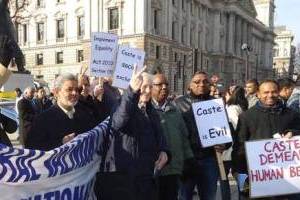
			<content:encoded><![CDATA[<p class="bodytext"><p class="summary">Following yesterday’s vote in the House of Commons against outlawing caste discrimination, campaigners - including the Dalit Solidarity Network UK - have vowed to continue their struggle to make this form of discrimination illegal. </p>As up to a thousand people demonstrated in Londons’ Parliament Square yesterday, a majority of MPs in the House of Commons voted against an amendment to a bill that would include caste discrimination in the country’s Equality Act. </p>
<p class="bodytext">The outcome of the vote ensured that it still not illegal in the UK to discriminate others on the basis of caste, despite strong evidence that this is a serious problem within immigrant communities from South Asia. It is estimated that hundreds of thousands of Dalits live in the UK, making them potential targets of caste discrimination.</p>
<p class="bodytext">&quot;I am very disappointed. But we'll keep going until we get this legislation,&quot; Meena Varma, Director of the Dalit Solidarity Network UK (DSN-UK), said in a comment to the vote which saw 307 MPs oppose a legal ban with 243 in favour.</p>
<p class="bodytext">The majority backed the British government’s decision to counter caste discrimination through a community education programme rather than legislation, despite government-commissioned...</p>]]></content:encoded>
			
			 
			<pubDate>Wed, 17 Apr 2013 16:17:00 +0200</pubDate>
			
		</item>
		
		<item>
			<title>Pakistan: Dalits demand representation</title>
			<link>http://idsn.org/news-resources/idsn-news/read/article/pakistan-dalits-demand-political-representation/128/</link>
			<description> Participants in a consultation on Dalit political representation have adopted a resolution urging political parties in Pakistan to nominate members of ‘scheduled castes’ for seats in the country’s elected assemblies. </description>
			<content:encoded><![CDATA[<p class="bodytext"><p class="summary">Participants in a consultation on Dalit political representation have adopted a resolution urging political parties in Pakistan to nominate members of ‘scheduled castes’ for seats in the country’s elected assemblies. </p>Political parties in Pakistan should include Dalits in their lists of candidates for the upcoming elections to ensure that they are represented in national and provincial assemblies. Otherwise, they will miss out on the Dalit vote, a meeting in Hyderabad of Dalit groups and political and social activists concluded last week.</p>
<p class="bodytext">In a unanimous resolution they urged the parties to do the following: nominate at least one Dalit for a seat reserved for minorities; nominate a Dalit woman for a seat reserved for women; allot at least one general seat to a Dalit. Parties that fail to do this should not receive any votes from ‘scheduled castes’ (the official term for Dalits), the resolution said.</p>
<p class="bodytext">Zulfiqar Shah, general secretary of the Pakistan Dalit Solidarity Network (PDSN), noted that there are several million Dalits in Pakistan. They have a sizeable vote in a number of constituencies, particularly those in the lower part of Sindh province. Mr Shah stressed that the Dalit vote can be...</p>]]></content:encoded>
			
			 
			<pubDate>Tue, 02 Apr 2013 15:10:00 +0200</pubDate>
			
		</item>
		
		<item>
			<title>MRG: End violence against Dalit women</title>
			<link>http://idsn.org/news-resources/idsn-news/read/article/mrg-end-violence-against-dalit-women/128/</link>
			<description> It is time for comprehensive action to end violence against Dalit women and girls, says Minority Rights Group International on International Women’s Day. The full statement follows here. </description>
			<content:encoded><![CDATA[<p class="bodytext"><p class="summary">It is time for comprehensive action to end violence against Dalit women and girls, says Minority Rights Group International on International Women’s Day. The full statement follows here. </p>On International Women’s Day, Minority Rights Group International  (MRG) calls for comprehensive action to end violence against Dalit women  and girls, including breaking down the barriers encountered by them at  all stages of the justice system.‘Dalit women and girls in South  Asia are often doubly disadvantaged because of their caste and gender,  and face an excessive prevalence of violence and discrimination. This  vulnerability underscores their urgent need for effective and efficient  access to justice,’ says Carl Soderbergh, MRG’s Director of Policy and  Communications.Dalit women and girls face violence not only by  non-Dalits but also by members of their own communities and households.  They remain vulnerable to violence that pervades their villages, their  homes and their most intimate relationships. Violence is used against  Dalit women and girls to reinforce both caste and gender norms.According  to deep-seated traditions, Dalits in South Asia fall outside the social ...</p>]]></content:encoded>
			
			 
			<pubDate>Fri, 08 Mar 2013 09:17:00 +0100</pubDate>
			
		</item>
		
		<item>
			<title>Rally decries UK government caste policy</title>
			<link>http://idsn.org/news-resources/idsn-news/read/article/rally-decries-uk-government-caste-policy/128/</link>
			<description> As anti-caste discrimination campaigners demonstrated outside the British Parliament, the House of Lords decided to back an amendment to a bill that would make caste discrimination illegal in the UK.</description>
			<content:encoded><![CDATA[<p class="bodytext"><p class="summary">As anti-caste discrimination campaigners demonstrated outside the British Parliament, the House of Lords decided to back an amendment to a bill that would make caste discrimination illegal in the UK.</p>Efforts to outlaw caste discrimination in the United Kingdom continued yesterday despite last week’s decision by the government to use education rather than legislation to address this form of discrimination.</p>
<p class="bodytext">Hundreds of campaigners from various groups, including the Dalit Solidarity Network UK (DSN-UK), gathered in London’s Parliament Square to show their disapproval of the government’s decision not to implement legislation that would offer hundreds of thousands of Dalits in the UK legal protection against caste discrimination.</p>
<p class="bodytext">Inside Parliament, meanwhile, the House of Lords went against the government’s position and voted for a legal ban on caste discrimination. Following a debate on the issue, a sizeable majority of peers decided to amend a bill that would activate a clause in the Equality Act to outlaw this form of discrimination.</p>
<p class="bodytext">“I have absolutely no doubt that it would be utterly wrong for us to say to the world that we had the opportunity to protect people from this...</p>]]></content:encoded>
			
			 
			<pubDate>Mon, 04 Mar 2013 16:17:00 +0100</pubDate>
			
		</item>
		
	</channel>
</rss>