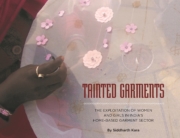
- Alternative report on Civil and Political Rights of Al-Akhdam in Yemen submitted by All Youth Network for Social Development and IDSN
- Link to website incl. List of Issues and state report
- Concluding Observations (CCPR/C/YEM/CO/5)
In the Concluding Observations, the Human Rights Committee raised the following concern on the situation of the Al-Akhdam:
- 12. The Committee is concerned about reports of long-standing discrimination and marginalization of some minority groups such as the Al Akhdam community, 80% of which is illiterate and which suffers from extreme poverty, and has inadequate access to health care, water and other basic services. The Committee is particularly concerned that in the context of the 2011 unrest, the Al Akhdam community has suffered from acts of aggression and intimidation, which have allegedly not led to any investigation and prosecution so far (arts. 2, 7 and 26).
The State party should ensure that all members of ethnic, religious and linguistic minorities enjoy effective protection from discrimination and are able to enjoy their own culture and equally to access education, health and public services. Victims of discrimination should be provided with effective remedies, including compensation.
- Link to CESCR Concluding Observations on Yemen (2011)
- Go to the CESCR website for more information (List of issues, state report, NGO reports)
- Download the alternative CESCR report on the Al-Akhdam in Yemen submitted by the All Youth Network for Social Development in association with IDSN (2011)
Abstract from the Concluding Observations:
- 7. The Committee is deeply concerned about the widespread manifestations of discrimination in Yemen against disadvantaged and marginalized individuals and groups, in particular women, which often bear a structural character.
The Committee recommends that the State party adopt a comprehensive anti-discrimination law, addressing all disadvantaged and marginalized sectors of the society. The Committee invites the State party to draw guidance in these endeavors from its General Comment No. 20 (2009) on non-discrimination in economic, social and cultural rights.
- 8. The Committee is concerned that the Al-Akhdam people continue to face social and economic marginalization and discrimination, especially concerning access to employment, conditions of work, extensive level of child labour, extremely high levels of school drop-out, lack of adequate housing, water and sanitation, as well as electricity, (art.2).
The Committee calls on the State party to combat the social discrimination and marginalization faced by the Al-Akhdam people, including through temporary special measures, in line with the Committee’s General Comment No.20 on Non-Discrimination in Economic, Social and Cultural Rights, and to adopt a national action plan for this purpose, elaborated with the participation of Al-Akhdam people and equipped with an effective, participatory and transparent monitoring and implementation mechanism. The Committee also recommends that the planned measures focus on access to employment, adequate conditions of work, enrolment of children in education and prevention of school drop-outs, access to medical care, and reduction of child mortality, as well as access to adequate housing, water, sanitation and electricity.
- 8. The Committee is concerned about the persistence of de facto discrimination, within the Yemeni civil society, in relation to some marginalized and vulnerable groups, commonly referred to as Akhdam, Ahjuror Zubud (derogatory terms for which no neutral alternatives exist).
- 27. The Committee urges the State party to undertake effective measures, such as awareness-raising campaigns and educational programmes, to combat de facto discrimination, in particular against marginalized and vulnerable groups in society commonly referred to as Akhdam, Ahjur or Zubud.
The Committee requests the State party to submit its second periodic report by 30 June 2008.
Abstract from Concluding Observations
- 15. While noting the State party’s efforts to introduce safety net programmes aimed at improving the livelihoods of marginalized groups, the Committee is concerned at the persistent and continued social-economic exclusion of descent-based communities such as the Al-Akhdam, some of whom are understood to be of African descent. The Committee also expresses its concern at the failure by the State party to acknowledge that the Al-Akhdam have different ethnic characteristics (articles 2(2) and 5).
Bearing in mind its General Recommendation No. 29 (2002) on Descent, the Committee recommends that the State party should study the root causes of the marginalization of the Al-Akhdam people. The Committee further recommends that the State party should strengthen its efforts to improve the welfare of all marginalized and vulnerable descent-based groups, particularly the Al-Akhdam, in the fields of education, access to health, housing, social security services and property ownership.
The Committee recommended the State party to submit its 19th and 20th periodic reports in a single document, due on 17 November 2013 (…) and that it address all points raised in the present concluding observations
- Concluding Observations
- Link to website incl. state report
- Shadow report on the situation of the Al-Akhdam people prepared by AlternativeWorld/Partnership for Equal Development in association with IDSN
Abstract from Concluding Observations:
- 8.The Committee takes note of the discrepancy between the assessment of the State party, according to which Yemeni society is ethnically homogenous, and credible information the Committee has received regarding descent-based and/or culturally distinguishable groups including the Al-Akhdam.In light of its general recommendation 4 (1973) as well as of paragraph 8 of its reporting guidelines, the Committee reiterates its recommendation to the State party that information on the ethnic composition of the population be provided in its next periodic report. It also recalls its general recommendation 8, which states that identification of ethnic or racial groups shall, if no justification exists to the contrary, be based upon self-identification by the individual concerned, and draws the attention of the State party to general recommendation 29 (2002) on article 1 (1) of the Convention, regarding descent.
- 9. The Committee remains concerned at the absence of a definition of racial discrimination in domestic legislation (art. 1).The Committee recommends to the State party that it incorporate in its domestic law a definition of racial discrimination that includes all elements set forth in article 1 of the Convention, which defines racial discrimination as discrimination on the grounds of race, colour, descent or national or ethnic origin.
- 11. The Committee reiterates its concern about the absence of comprehensive legislation to prevent and prohibit racial discrimination on the grounds of race, colour, descent or national or ethnic origin (art. 2).The Committee urges that the State party take all necessary and appropriate measures to extend full protection from racial discrimination to all persons, irrespective of their race, colour, descent or national or ethnic origin. In this regard, the Committee recommends that the State party strengthen its domestic legislation and put in place a comprehensive anti-discrimination legal regime according to the requirements of article 2 of the Convention.
- 15. The Committee is deeply concerned at the persistent reports of de facto discrimination against descent-based, culturally distinct communities, among others, the Al-Akhdam. The Committee is particularly concerned about discrimination that interferes with or impairs the enjoyment of their economic, social and cultural rights (arts. 2 (2) and 5).In light of its general recommendation 29, the Committee recommends that the State party develop and put into action a national strategy with the participation of members of affected communities, including special measures to be adopted in accordance with article 2 (2) of the Convention, in order to eliminate discrimination against members of marginalized and vulnerable descent-based groups. In particular, the Committee recommends that the State party develop legislation and practice prohibiting all discriminatory practices based on descent in employment, housing and so as to ensure equal access to health care and social security services for members of affected communities, in particular the Al-Akhdam.
- Main areas of concern and recommendations
- General principles (arts. 2, 3, 6 and 12 of the Convention)
Non-discrimination
- 29. The Committee is concerned at the persistence of discriminatory social attitudes against categories of children in marginalised and disadvantaged situations, including children who are addressed as Muhamasheen children, children born out of wedlock and children with disabilities, all of which have a negative impact in the enjoyment of their rights. It is deeply concerned at discrimination against girls from the earliest stages of their life and through their childhood due to the persistence of traditional attitudes and norms by which girls are perceived as inferior than boys.
- 30. The Committee recommends that the State party:
- (a) Adopt and implement a comprehensive strategy addressing all forms of discrimination, including multiple forms of discrimination against all categories of children in marginalised and disadvantaged situations, and implement it in collaboration with a wide range of stakeholders and involving all sectors of society so as to facilitate social and cultural change;
- (b) Ensure that children who are in marginalised and in disadvantaged situations, such as children who are addressed as Muhamasheen children, children born out of wedlock and children with disabilities have access to basic services and enjoy their rights under the Convention; and
- (c) Take all the necessary measures to eliminate societal discrimination against women and girls through public educational programmes, including campaigns organized in cooperation with opinion leaders, families and the media.
- Education, leisure and cultural activities (arts. 28, 29 and 31 of the Convention)
Education, including vocational training and guidance
- 69. The Committee notes the efforts of the State party in the field of education during the reporting period. However, it remains concerned at:
- (f) The widening gap in the rate of school enrolment of children with disabilities and children addressed as Muhamasheen children when compared with the nationwide rates; and
The Committee invites the State party to submit its next consolidated fifth and sixth periodic reports by 30 May 2018 and to include in it information on the implementation of the present concluding observations.
Abstract from Concluding Observations
- 27. The Committee urges the State party to undertake effective measures, such as awareness-raising campaigns and educational programmes, to combat de facto discrimination, in particular against marginalized and vulnerable groups in society commonly referred to as Akhdam, Ahjur or Zubud.
- 32. The Committee is deeply concerned at the persistence of discriminatory social attitudes against girls. Furthermore, the Committee is concerned at the disparities in the enjoyment of rights and at the social discrimination experienced by children belonging to the most vulnerable groups, inter alia, children who are also addressed as Akhdam children, children born out of wedlock, children with disabilities, street children and children living in rural areas.
- 33. The Committee recommends that the State party:
- a) Strengthen its efforts to ensure that all children within its jurisdiction enjoy all the rights set out in the Convention without discrimination, particularly with regard to girl children, in accordance with article 2;
- b) Prioritize and target social services for children belonging to the most vulnerable groups, including those children referred as Akhdam children, children with disabilities, street children and children living in rural areas; (…)The Committee invites the State party to submit its fourth periodic report by 30 May 2008, which should not exceed 120 pages (see CRC/C/148).
- Principal subjects of concern and the Committee’s recommendations
- 18. With regard to the implementation of article 2 of the Convention, the Committee expresses its concern about the persistent disparities between the northern and southern regions of the State party as well as between urban and rural areas. Furthermore, the Committee remains concerned (see CRC/C/15/Add. 47, paras. 8 and 9) about the occurrence of discrimination affecting girls, children with disabilities, children born out of wedlock, refugee children, Akhdam children and children belonging to nomadic groups. The Committee reiterates its recommendation to the State party to continue taking measures to reduce economic, social and geographical disparities, including between rural and urban areas, and to prevent discrimination against the most disadvantaged groups of children.
- Principal subjects of concern
- Suggestions and recommendations
- 9. The Committee is also concerned at the insufficient measures and programmes for the protection of the rights of the most vulnerable children, in particular girls, children living in rural areas, children victims of abuse, children affected by armed conflicts, disabled children, “akhdam” children and children who are forced to live and/or work in the streets, including child beggars.
- 19. The Committee encourages the Government to improve the system of collecting statistical and other data in all areas covered by the Convention, with a view to evaluating progress in the realization of children’s rights.
Appropriate disaggregated indicators should be identified in order to pay particular attention to all groups of children, including the most vulnerable ones such as girls, children living in rural areas, children victims of abuse, children affected by armed conflicts, disabled children, “akhdam” children and children who are forced to live and/or work in the streets. Research activities should also be undertaken in these areas in cooperation with academic institutions and non-governmental organizations.
- 20. The Committee recommends that the State party, in the light of article 4 of the Convention and of the principles of non-discrimination and the best interests of the child, undertake all appropriate measures, to the maximum extent of the available resources, to ensure that budgetary allocation is provided to services for children, particularly in the areas of education and health, and that priority attention is paid to the protection of the rights of children belonging to the most disadvantaged groups, including girls, children living in rural areas, children affected by armed conflicts, disabled children, “akhdam” children and children who are forced to live and/or work in the streets.